Squamous Cell Carcinoma
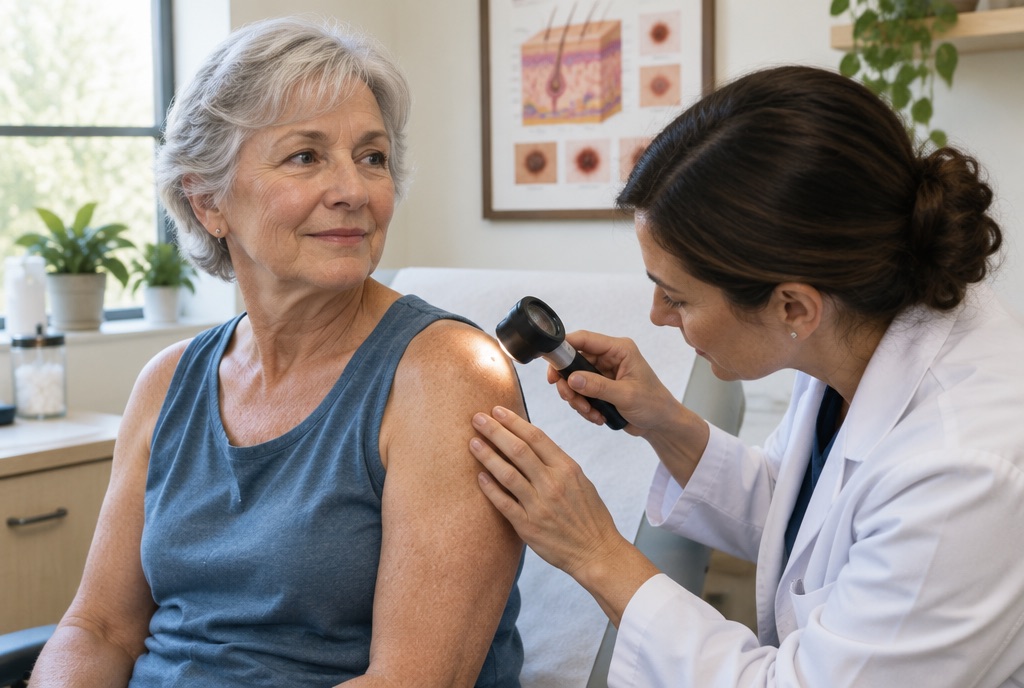
Cutaneous squamous cell carcinoma (SCC) is the second most common skin cancer, managed per the NCCN Squamous Cell Skin Cancer guideline and the AAD 2018 Guidelines of Care.
Symptoms
A red, scaly patch or a firm, raised, sometimes ulcerated or bleeding growth on sun-exposed skin; roughly 5.4 million keratinocyte carcinomas are diagnosed annually in the US.
Causes and risk
Cumulative UV exposure is the dominant risk factor; immunosuppression (including after organ transplant) substantially raises risk, along with fair skin, older age, prior skin cancer, smoking, chronic wounds, and HPV.
How it is evaluated
Biopsy into the dermis confirms diagnosis; the NCCN algorithm stratifies tumors into low, high, and very-high risk categories, with risk-based imaging (MRI for named-nerve concern, CT for bone) when indicated.
Treatment
Excision, electrodesiccation and curettage, or Mohs surgery are standard, with Mohs recommended by both NCCN and AAD for high and very-high-risk tumors; radiation is used as primary or adjuvant treatment, and immunotherapy is reserved for advanced disease, per the NEJM clinical review.
When to seek care
New numbness, tingling, or facial weakness near a lesion (signs of perineural invasion), new lumps in nearby lymph nodes, or rapid growth and ulceration all warrant urgent evaluation.